An Airbnb cleaning and linen service is two jobs sharing one clock: resetting the home, and getting sheets and towels off the beds, washed, dried and back on before the next check-in. A full wash and dry cycle is often longer than the window itself. Hosts solve that with spare sets, not with speed.
Who washes the sheets between Airbnb guests?
Three arrangements are common, and each of them works as long as one of them is agreed and written down before the first booking.
| Arrangement | How it runs | Where it breaks |
|---|---|---|
| Laundry on site, during the visit | Beds are stripped first and the machines run while the rest of the home is cleaned; the beds are made from a spare set | One washer and a same-day booking, or a load that still needs folding after the visit ends |
| Host collects and returns | Used linens are bagged and taken away; the host washes at home or elsewhere and returns a fresh set to the closet | The host is not nearby, or the handover is informal and a set quietly disappears |
| Outside laundry on a schedule | Linens leave and come back folded, on fixed collection days | Costs more per stay and needs enough sets to cover the days linens are away |
Whichever one you pick, the questions are the same: who starts the wash, who folds, who reports a stain that did not come out, and who is accountable for the bed being made when the guest opens the door. Those four answers are the whole arrangement.
Does an Airbnb cleaning and linen service include the laundry?
Only if you have agreed that it does, in advance and in writing. Hosts usually search for this as whether turnover cleaning includes laundry, and the honest answer is that the cleaning and the linens are normally scoped as two things, because the laundry depends on machines, cycle times and the length of your window rather than on the size of the house.
That is not a technicality. A cleaner who is also running two loads is holding a timer that nobody else in the home is watching, and the visit has to be scoped and scheduled around it.
The room-by-room task list for the visit itself is a separate piece of work, and it is covered in the turnover cleaning checklist. If you are still deciding what the service covers in the first place, start with what turnover cleaning is.
How many sets of sheets does a short-term rental need?
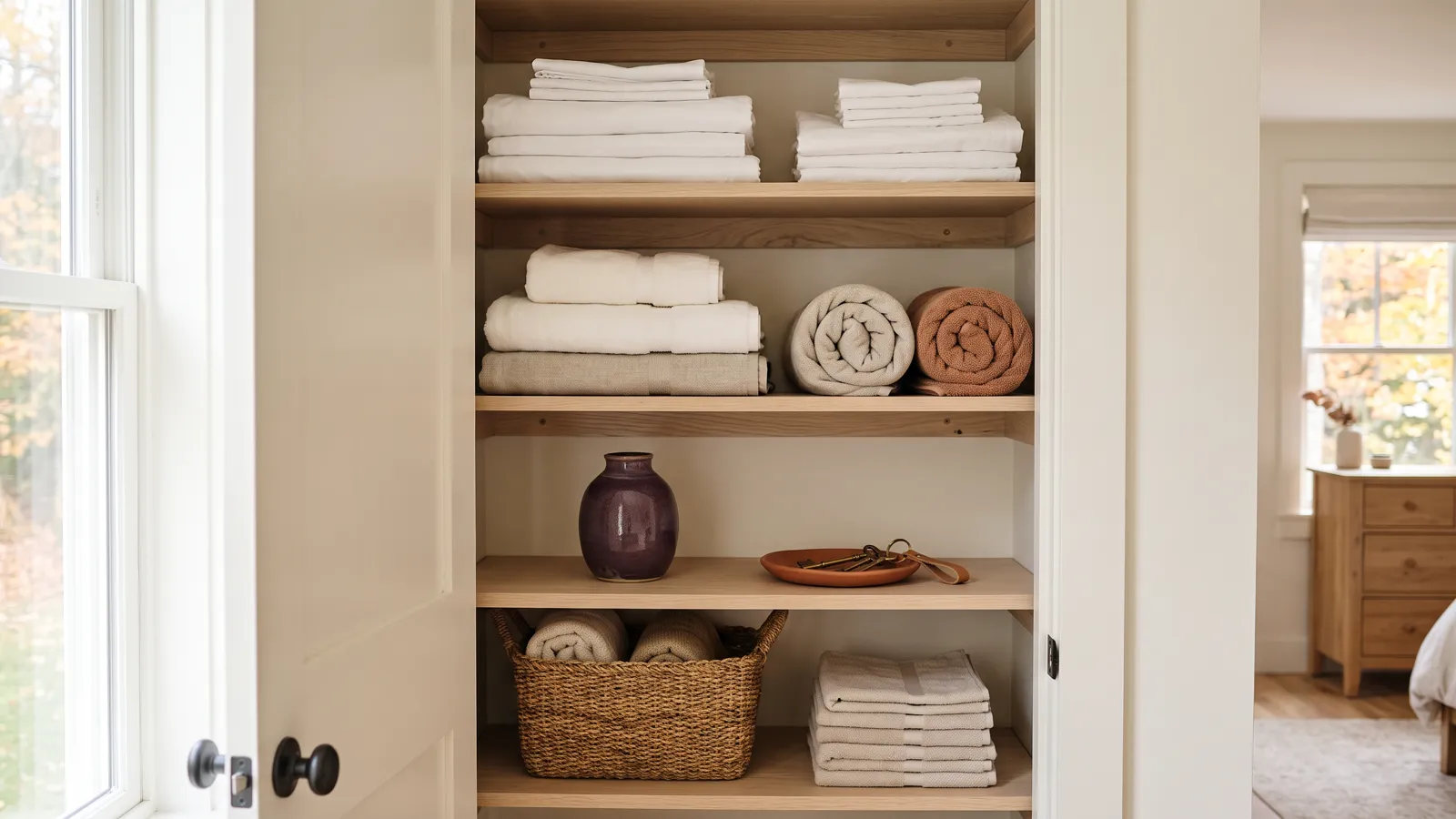
Count sets, not sheets. The working model is one set on the bed, one set in the closet and one set in the wash, which means two sets per bed is the practical minimum and three is what makes a same-day turnover calm.
Towels follow the same logic, counted per guest the listing sleeps rather than per bedroom: a bath towel, a hand towel and a washcloth each, plus a bath mat per bathroom. Pillow protectors and mattress protectors belong in the count too, because they also come off and go in the machine.
Set your par level against your busiest stretch rather than an average month. The holiday booking weeks are where a thin linen closet is first exposed, because that is when back-to-back stays stop leaving a spare day.
How should rental linens be washed and dried?
Sort first, load loosely, follow the temperature on the care label, and dry completely. Most of what goes wrong with rental linens is a shortcut at one of those four points.
- Sort before the machine, not at the machine. Texas A&M AgriLife Extension advises sorting to keep colors from fading onto other colors and to prevent the transfer of lint and soil. Keep terry towels, which shed lint, away from smooth fabrics that attract it, and keep heavily soiled items separate from lightly soiled ones.
- Read the care label. Manufacturers are required to attach care labels permanently, and the label sets the water temperature and the drying cycle for that item.
- Use a warm enough wash. The same Extension guidance notes that all detergents work better in water above 65 degrees, and that cold water should be used only when the care label calls for it.
- Measure the detergent. Every load needs detergent, and the amount comes from the product's own instructions. Too little leaves linens grayed or yellowed with stains and oils still in them. Powdered detergent dissolves better in hot water than cold, and a powdery residue on a sheet means it did not dissolve.
- Do not pack the washer. Overloading creates extra lint, leaves detergent behind on the fabric and shortens the life of the linens. Items go in loose and unfolded so water and detergent can circulate.
- Treat stains before anything goes in the dryer. Heat sets them. Extension guidance is plain about it: do not dry stained items, because the stain may become permanent.
- Dry completely, then take them out. The CDC's household laundry guidance is to launder with detergent at the recommended water temperature and dry items completely. Pulling linens out as the cycle ends also keeps the wrinkles from setting in the basket.
Why the dryer sets the pace, and needs watching
The dryer is the bottleneck in almost every same-day turnover, and it is also the appliance that most rewards two minutes of maintenance. The U.S. Fire Administration is direct: you are at higher risk of a clothes dryer fire if you do not clean the lint filter and the dryer vents.
Its guidance for the machine itself: never run the dryer without a lint filter, clean the filter before and after each cycle, and clean behind the dryer where lint builds up. For the venting, check that the system behind the dryer is not damaged, crushed or restricted, and confirm the outdoor vent cover actually opens while the dryer runs. The EPA adds the same point from the moisture side, recommending that moisture-producing appliances such as dryers vent to the outdoors.
A restricted vent is also why a load that used to take one cycle now takes two, which is the difference between a turnover that fits the window and one that does not.
A note on bleach
Bleach has a narrow place in rental laundry. Texas A&M AgriLife Extension describes chlorine bleach as a stain remover for white and colorfast items only, not for silk, wool, spandex, noncolorfast fabrics or anything with a flame-retardant finish, and notes that repeated use weakens fibers, cotton in particular.
Where linens live between stays
In a dry, conditioned closet, never in a damp basement or a sealed bin. The EPA advises keeping indoor humidity below 60 percent and ideally between 30 and 50, and notes that wet or damp materials dried within 24 to 48 hours will in most cases not grow mold. A set that goes onto a shelf still slightly cool is the most common reason a freshly made bed smells stale on arrival.
This matters more here than the national advice suggests. Summers in the Merrimack Valley are humid, and a rental that sits closed for three days between bookings holds that moisture in the closet along with everything else. In Salem or Windham, the winter version is a cold, shut-up house where a load dries slowly and a half-dry towel feels dry to the hand.
The practical rule is the same in both seasons: nothing goes on a shelf warm or cool to the touch, and the closet stays inside the heated, conditioned part of the house.
What hosts should stage for the cleaning team
A linen system is mostly furniture and labels. Before the first visit, set up:
- One labeled shelf per bed, holding a complete spare set
- A closed bag or hamper for used linens, so fresh and used never share a surface
- Detergent stored in plain sight, with the dose written on the lid if more than one person uses it
- A written par level for linens and towels, and one person responsible for counting against it
- A low shelf for retired sets, kept for cleaning cloths rather than returned to the rotation
How a Turnover Cleaning visit fits around it
Andemora's Turnover Cleaning resets the home itself. Every room is worked top to bottom, from the back of the house to the front door, towels folded the same way each visit, fresh bin liners, mirrors and glass checked under side light, then a walkthrough against the checklist under both room light and natural light, lights off, doors locked, and a photo report at the end so you can see the home as the guest will.
Where the laundry happens sits outside that list and is settled with the host before the first visit, because it depends on your machines and your window rather than on the house. Andemora cleans short-term rentals across Southern New Hampshire and the Merrimack Valley, and you can ask for an estimate with your checkout and check-in times in hand.
Frequently asked questions
Should sheets and towels be washed together?
Usually not. Texas A&M AgriLife Extension advises separating fabrics that shed lint, such as terry towels, from smooth fabrics that attract it, and keeping heavily soiled items away from lightly soiled ones.
What if the rental has no washer and dryer?
Then the linens have to leave the home, which means you need enough sets to cover the time they are away plus the next stay. Hosts in that position usually keep more sets and a firm collection day rather than trying to compress the turnaround.
Is it safe to wash one guest's linens with another's?
Yes. The CDC says it is safe to wash dirty laundry from a person who is sick together with other people's items, as long as you launder with detergent at the recommended water temperature and dry items completely.
How do you know when rental linens should be retired?
When hems fray, fabric thins at the fold lines, or a stain no longer comes out after a second treatment. Keep a low shelf for retired sets and use them as cleaning cloths or drop cloths so they never find their way back onto a bed.
Where should the used set go during the visit?
Into a closed bag or a dedicated hamper, away from the fresh stack and off the floor of a finished room. Mixing used and fresh linens on the same surface is how the wrong set ends up on the bed.
Sources
- When and How to Clean and Disinfect Your Home · CDC
- Laundry on Your Own (L-5200) · Texas A&M AgriLife Extension Service
- Clothes Dryer Fire Safety · U.S. Fire Administration, FEMA
- A Brief Guide to Mold, Moisture and Your Home · EPA