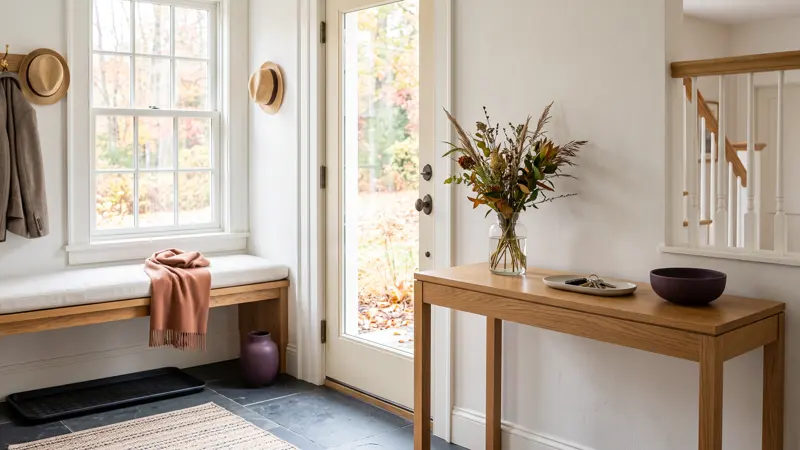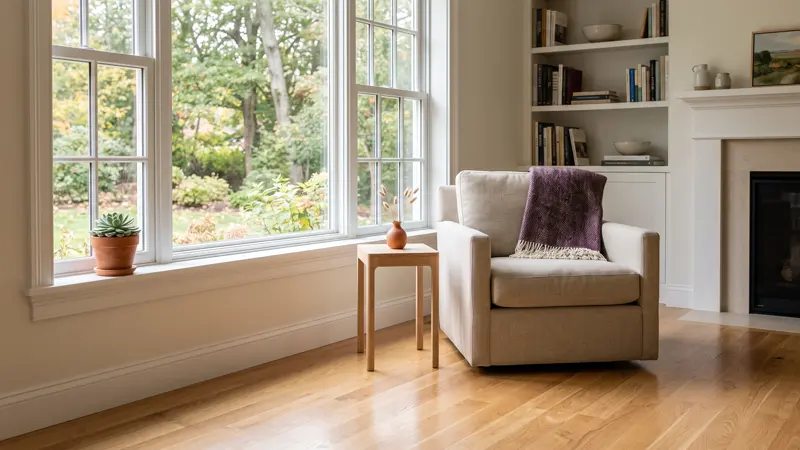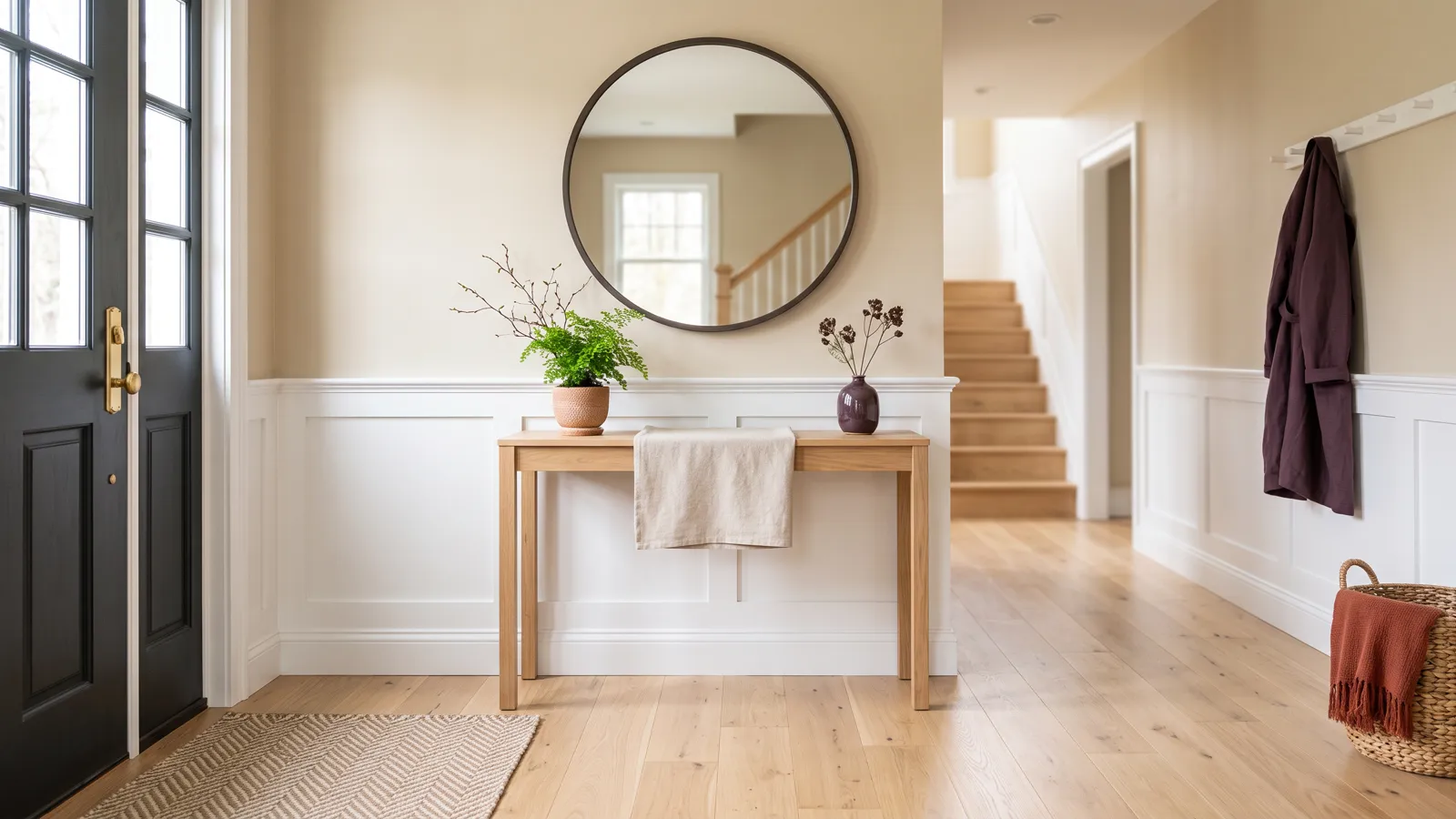
Before a cleaning service comes, clear counters, nightstands and floors so every surface can be reached, put away valuables, medicines and paperwork, secure pets, and confirm access and parking. The job is clearing, not cleaning. Fifteen minutes of putting things away is worth more than an hour of scrubbing ahead of the team.
What should you do before a cleaning service comes?
Clear the flat surfaces and the floors, in that order. A covered surface cannot be cleaned, and a cleaner who has to decide where your mail belongs is spending your time on a decision that was never theirs to make.
This is the fifteen-minute pass, room by room:
- Kitchen: clear the counters of mail, keys, chargers and small appliances you want moved; empty the sink if you can.
- Bathrooms: clear the vanity down to what lives there permanently; put away open razors, contact lenses and anything you would rather nobody handled.
- Bedrooms: clear nightstands and dressers; put laundry in a basket rather than on the floor; leave the bed as it is.
- Floors: pick up toys, shoes, cords, pet bowls and anything a vacuum would have to navigate around.
- Whole house: put away cash, jewelry, documents and loose medication, and set out anything the team should use or avoid.
Floors matter more than they look. The EPA describes indoor dust as settled particulate matter that "can be easily kicked up into the air by cleaning, vacuuming, and other activities like walking and crawling," and recommends vacuuming carpets and furniture every week or more often, and dusting with a damp cloth so settled dust does not go back into the air. A clear floor is the difference between dust being removed and dust being relocated.
Should you clean before the cleaner arrives?
No. Wiping a counter before someone arrives to wipe counters is work done twice, and it tends to come out of the time meant for the parts of the house you actually dislike doing.
There is one distinction worth holding onto. Tidying helps; cleaning does not. Putting the throw blanket back on the sofa gives the team a surface to clean. Pre-scrubbing the shower gives them a clean shower and one less reason for the visit.
If you find yourself tidying for two hours out of embarrassment, skip it. Nobody is keeping score, and a home is not supposed to be photo-ready for the person coming to clean it.
What should you put away or lock up before a visit?
Four categories, and they take about five minutes. Valuables and cash, documents and anything with account numbers on it, loose medication, and household chemicals.
Medication is the one people forget, because it usually lives on a counter or a nightstand. The CDC advises keeping all medicines, vitamins and supplements, including gummies, up and away and out of children's reach and sight, and never leaving them out on a kitchen counter or at a sick child's bedside, even if the next dose is a few hours away. It also says to relock the safety cap each time, twisting until it clicks, and to remind babysitters, houseguests and visitors to keep purses, bags and coats that hold medicines up and away and out of sight while they are in your home. Roughly 100 young children are brought to the emergency room each day because they got into medicines left within reach.
Household chemicals follow the same logic. The CPSC advises keeping chemicals and cleaning supplies in a locked cabinet or box and out of the reach of children, and keeping them in their original child-resistant containers. If a visit is the moment your under-sink cabinet gets opened and emptied onto the floor, that is the moment to put the lock back on it too.
As for valuables, a reputable provider background-checks its team and never discusses your keys, codes or routine with anyone. Putting things away is not suspicion. It is the same reason you close a laptop when a plumber comes: fewer things in play, fewer things to think about.
What should you tell your cleaner before the first visit?
Everything that would otherwise get decided on the spot by someone who has never been in your home. A short message the day before covers most of it.
| Tell them | Why it matters |
|---|---|
| Natural stone, unsealed wood, specialty finishes | Abrasives and acids damage marble, granite and bare wood permanently |
| Pets, and where they will be | Changes doors, timing and how the team enters |
| Allergies or scent sensitivity | A neutral clean scent should be the ceiling, not a starting point |
| Parking and entry | Driveway, door, code or key handoff, agreed before the day |
| Rooms to skip | A closed door with no note gets treated as off limits |
| Add-ons you want | Appliance interiors are normally quoted by condition, not added mid-visit |
| Anything fragile or already damaged | A loose towel bar or a cracked tile gets worked around, not discovered |
Scope belongs in this conversation too. The inside of the microwave is part of a normal visit, while the inside of the refrigerator and the oven are add-ons, and inside cabinets and pantry organization are separate work arranged with you. The full picture of what sits inside a visit is in what house cleaning services include.
What should you do while your house is being cleaned?
Whatever you were going to do anyway. Most people leave, some work from home, and both are normal as long as access was agreed in advance.
If you are home, the useful move is to agree an order of rooms. Say which room you need last, work there first, and move once as the team moves through. Following people from room to room slows the work and helps nobody.
Pets and small children are the real variable. Decide before the day where they will be, especially if a door has to stay open for supplies. Ventilation is worth a thought as well: the EPA says one way to lower the concentration of indoor pollutants is to increase the amount of outdoor air coming indoors, and that this matters particularly during short-term activities that generate higher levels of pollutants. Cracking a window in the room being worked on, when the weather allows, costs nothing.
What changes before a visit in a New England home
Winter changes the first ten feet. From December into March, a team arrives carrying supplies through salt, slush and whatever the plow left at the end of the driveway, so clearing the walk and a spot to park is part of preparing for the visit. A mat inside the door and a place for boots keeps the rest of the floor out of it.
Mud season does the same thing with grit and water, and spring pollen settles on sills, tracks and blinds across Southern New Hampshire and the Merrimack Valley. If pollen is heavy, closing the windows the night before means the sills get cleaned rather than refilled an hour later.
How a visit runs at Andemora
Rayane Moura has been cleaning homes in Southern New Hampshire and the Merrimack Valley since 2020, and every visit follows the four steps of the Triple-A Standard. Arrival: on time, uniformed, with our own supplies and a message on the way, so you know when to expect the door. Execution: top to bottom, back of the house to the front door, with personal items returned to their exact place.
Then the walkthrough, where every room is re-checked against the checklist under room light and natural light, and lock-up, with lights off, doors locked and a message that the home is ready. No rag or bucket left behind, no furniture moved and not put back, nothing abrasive on stone or wood.
First visits start with a deep clean, which is longer and reaches the edges a recurring visit maintains afterward. The scope is written down before the day, not improvised during it, so you can ask for an estimate and have the list for your home in advance.
Frequently asked questions
Do I need to provide cleaning supplies or a vacuum?
Ask before the first visit, because providers differ. Andemora brings its own supplies, included in the service, so nothing needs to be waiting under your sink.
Can I ask the team to skip a room?
Yes, and it is better said in advance than on the day. A closed door with no explanation gets treated as off limits, which may not be what you wanted.
Should I do the dishes before the cleaner arrives?
It helps, because a full sink blocks the faucet and half the counter. If dishes are part of what you want handled, agree that in advance so the time is in the quote.
What should I do about the trash before a visit?
Nothing. Emptying bins and putting in fresh liners is part of the visit, so leave them as they are rather than running them out first.
How much should I tidy if the visit is a deep clean?
The same fifteen-minute pass, with one addition: clear the cabinet fronts, windowsills and the floor of closets you want reached, since a deep clean works the edges a weekly visit does not.
Sources