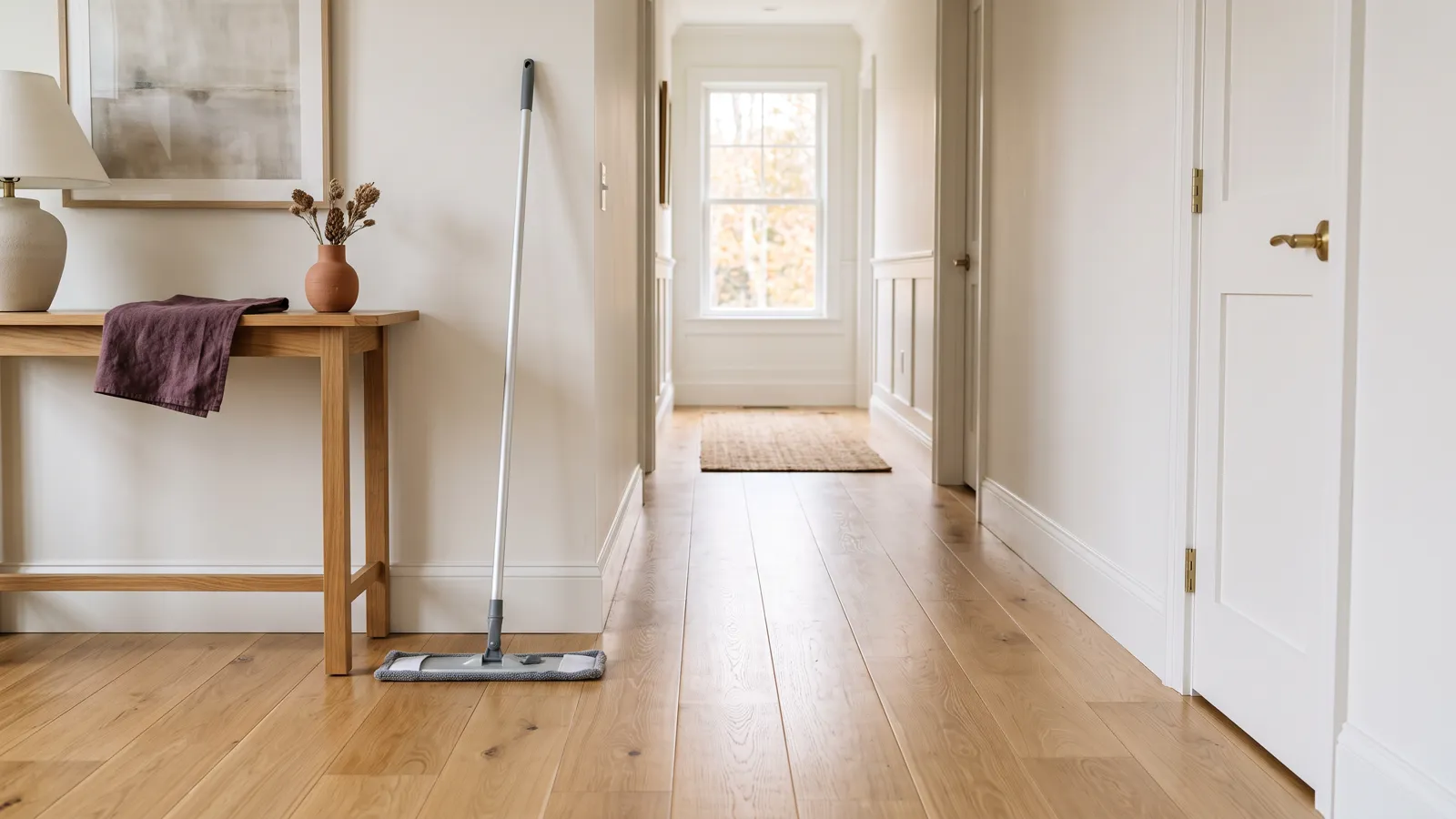
To deep clean hardwood floors, first remove every bit of grit with a dust mop or a vacuum made for hard floors. Then wash small sections with a pH-neutral wood floor cleaner on a damp, well-wrung microfiber mop, and leave nothing wet behind. Match the product to your floor's finish, and skip vinegar, bleach and ammonia.
What is hardwood floor cleaning, and what makes a deep clean different?
Hardwood floor cleaning is the removal of dust, grit and film from the finish that protects the wood. Routine care keeps loose soil off the surface. A deep clean goes further: along the baseboards, under furniture, into corners and across the whole floor with a cleaner, not only the paths people walk.
The goal is not to clean the wood itself. On most floors you never touch the wood at all. You clean the finish, the coating on top, and your job is to leave it clear, dry and intact.
How do you know what finish your hardwood floor has?
Run your hand across the boards. The American Hardwood Information Center says that if you can feel the grain of the wood, you likely have a penetrating finish, often topped with wax. If the surface feels smooth and sealed, you likely have a surface finish such as polyurethane.
The difference matters. The National Wood Flooring Association describes surface finishes as film-forming coatings that stay on top of the wood, while penetrating oil and hard wax oil finishes soak into the pores and harden there.
How do you deep clean hardwood floors, step by step?
Work dry first, then damp, and always in small sections. This method is for surface-finished floors.
- Clear the floor. Lift rugs, chairs and small items so the whole surface is open. Note where each piece goes so it returns to the same spot.
- Remove grit. The American Hardwood Information Center recommends a dust mop, a broom with exploded tips, or a vacuum with a hardwood attachment or the beater bar turned off. Go along the baseboards and into the corners, where dust collects.
- Mix or prepare the cleaner. Use a pH-balanced cleaner made for wood floors, or the one your floor maker names. Read the label and use the amount it lists.
- Mop damp, not wet. The National Wood Flooring Association advises a damp mop rather than a soaking one and warns against traditional string mops and buckets, which put down too much water.
- Work in small sections and rinse the pad often. The same source recommends working in small sections and rinsing frequently, so you lift soil instead of spreading it.
- Leave nothing wet. The NWFA is plain about this: never leave wood floors wet, because excess water can seep into the seams and damage the wood.
- Put everything back. Return rugs and furniture once the floor is fully dry, with felt pads under the legs.
What cleaning solution is best for hardwood floors?
The best cleaner for a surface-finished hardwood floor is a pH-neutral wood floor cleaner, or the product your floor maker recommends. It lifts soil without attacking the finish, and it does not leave a film.
What to leave in the cabinet matters just as much.
| Product | On a surface-finished floor | Why |
|---|---|---|
| pH-neutral wood floor cleaner | Yes | Made to clean the finish without harming it |
| Vinegar and water | No | The NWFA says its acidity can damage the wood and finishes |
| Bleach or ammonia-based cleaners | No | The NWFA lists both among products to avoid |
| Household waxes, oils and "protective" products | No | The NWFA advises against them; the AHIC says wax or petroleum products damage a surface finish |
| Soaking wet mop or string mop and bucket | No | Too much water, which can reach the seams |
Floors with a wax finish are the exception. The American Hardwood Information Center says those need solvent-based waxes, buffing pastes or cleaning liquids made specifically for wax-finished floors, and water-based routines are not the right fit. Oil-finished floors should follow the care system from the oil's maker.
Why can't I get my hardwood floors clean?
When a floor still looks dull or streaky after careful cleaning, the cause is usually residue, dirty water or a worn finish, not dirt you missed.
- Residue. Products not made for your finish, such as household waxes and oils, can leave a film on a surface finish. Each new coat of that product builds on the last one, so the floor looks cloudy right after it is cleaned.
- Dirty mop water. A mop that is not rinsed often simply moves a thin layer of soil from one board to the next.
- Grit left behind. Dust and sand that are not removed before mopping turn into a gray haze once they get wet.
- A worn finish. No cleaner can bring back a finish that is worn through.
To check the finish, the American Hardwood Information Center suggests a water test in a high-traffic area. If water beads up, the finish is still protecting the floor. If the spot darkens after a few minutes, the finish is partly worn. If the water soaks in right away, the floor needs recoating or refinishing. Blot the test spot dry as soon as you have your answer.
That last result is not a cleaning problem. Sanding, recoating and refinishing belong to a flooring professional.
Can you get hardwood floors professionally cleaned?
Yes. A house cleaning team can deep clean a finished hardwood floor as part of a wider visit, and a flooring professional handles the work that changes the floor itself, such as buffing, recoating, sanding and refinishing.
The two are different jobs. Cleaning removes what sits on top of the finish. Floor restoration works on the finish or the wood. If your water test shows the finish is worn through, start with a flooring professional, then keep the new finish clean with the routine above.
For what else a full reset covers beyond the floors, see what a deep clean of a house includes.
What is different about hardwood floors in New England homes?
Two things: seasons of grit at the door and big swings in indoor humidity. Winter brings sand and road salt in on boots, and spring mud season does the same with wet soil. Doormats at every entrance, which the NWFA recommends to hold back dirt and moisture, do a lot of the work. Salt residue needs its own approach, covered in how to remove salt stains on floors.
Humidity is the quieter issue. Heated air in January is dry, and a humid August is the opposite, and wood moves with it. The NWFA recommends keeping indoor humidity consistent, and the EPA advises keeping it below 60 percent, ideally between 30 and 50 percent, to limit mold. A hygrometer in the main living area tells you where you stand.
How Andemora handles hardwood floors
In a Deep Cleaning visit, floors come last, after the room above them is done, and we work from the back of the house to the front door. We never use abrasive products on wood, furniture that is moved goes back to its exact place, and every room is re-checked against the checklist under room light and natural light before we leave.
We clean floors; we do not sand, recoat or refinish them. If a floor needs that, a flooring professional is the right call. If you would like the cleaning handled, you can request an estimate.
Frequently asked questions
Can I use a steam mop on hardwood floors?
A steam mop adds heat and moisture, the two things wood care tries to keep off the boards. Check the instructions from your floor or finish maker before using one, and when in doubt, use a damp microfiber mop instead.
Should I wax a hardwood floor after cleaning it?
Only if the floor already has a wax finish. The American Hardwood Information Center says wax-based or petroleum-based products should never go on a surface-finished floor, because they damage the finish.
How should I clean a spill on a wood floor?
Right away, with a soft, dry or slightly damp cloth, working from the edges of the spill toward the center. Blot rather than rub, and leave the spot dry.
Are rubber-backed rugs safe on hardwood?
The American Hardwood Information Center advises against rubber-backed rugs because they can discolor the floor. Rug pads made for wood floors are the safer choice.
Sources
- How to Clean and Take Care of Your Wood Floors · National Wood Flooring Association
- Wood Floor Finishes · National Wood Flooring Association
- Know your Hardwood Floors by Starting at the Finish · American Hardwood Information Center
- Keeping hardwood floors looking beautiful is easier than you think · American Hardwood Information Center
- A Brief Guide to Mold, Moisture and Your Home · EPA
- When and How to Clean and Disinfect Your Home · CDC