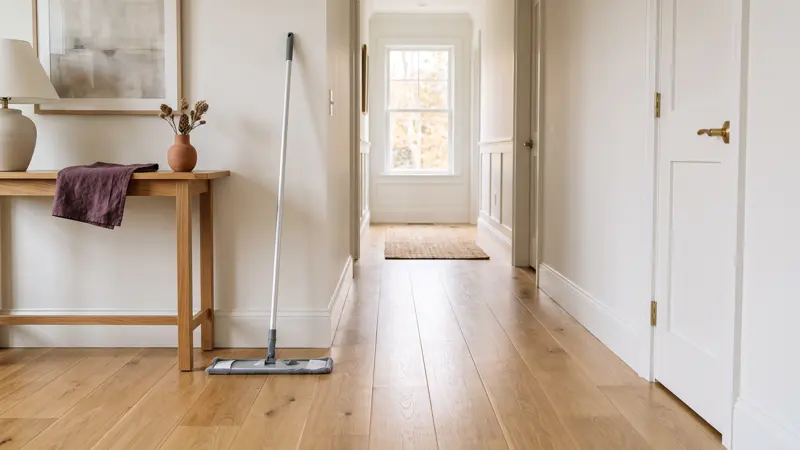

Salt stains on floors are the white film road salt leaves after snow melts off boots. To remove them, sweep or vacuum the dry grit first, wipe with a damp mop and the cleaner made for that floor, then dry the surface. The cleaner changes by floor type, and prevention at the door does most of the work.
Does salt stain hardwood floors?
Yes, salt can leave a white haze on hardwood, and the grit and melt water that come with it are the bigger risk. The film sits on top of the finish, so it usually wipes away when you catch it early. What does the damage is the combination: sharp crystals dragged across the surface and water left standing on the boards.
The National Wood Flooring Association warns that excess water can seep into the seams and damage the wood, which is why a puddle of slush by the door matters more than it looks. The same group suggests sweeping or dusting wood floors daily or weekly. In salt season, daily is the safer end of that range for entry areas.
One hardwood flooring maker, Nydree, advises sweeping or vacuuming salt away at the end of each day so it is gone before it has time to cause harm. For stubborn marks, it recommends a floor cleaner that removes salt while preserving the finish.
How to get rid of salt stains on hardwood floors
Remove salt stains on hardwood floors with a dry pass, a damp pass and a drying pass, in that order. Each step has a reason.
- Dry pass. Sweep with a soft broom or vacuum on the hard-floor setting. You want the crystals off the floor before any water touches them, or you are mopping with grit.
- Damp pass. Use a pH-balanced cleaner made for wood floors, as the National Wood Flooring Association recommends, on a damp mop or microfiber pad. Damp, not wet. Wring it well and work in small sections.
- Drying pass. Follow with a dry microfiber cloth or towel so no moisture sits in the seams.
- Check under side light. Look across the floor from a low angle, near a window. Any remaining haze shows up there, and a second damp pass on that spot is usually enough.
Skip the home remedies. The NWFA notes that vinegar's acidic nature can damage wood floors and finishes over time, and it advises against bleach and ammonia-based cleaners, which can strip the finish. Nydree gives the same warning about vinegar. For more on routine wood care, see our hardwood floor care guide.
How to clean salt off stone and tile floors
On natural stone, clean salt residue with a neutral cleaner, stone soap or a mild liquid dish detergent in warm water, which is what the Natural Stone Institute recommends. Dust mop the dry grit first with a clean, untreated dust mop. The institute points out that sand, dirt and grit are abrasive and can damage natural stone.
This is where vinegar advice found online can go wrong. The Natural Stone Institute says products containing lemon, vinegar or other acids may dull or etch calcareous stones, a group that includes marble, limestone and travertine. An etch is a mark in the stone itself, not on top of it, so it does not wipe away.
For glazed ceramic and porcelain tile, the same dry-then-damp-then-dry routine works well. Follow the tile maker's care instructions for the cleaner, and keep your attention on the grout lines at the door, where salty water tends to settle and dry.
| Floor | First step | Cleaner | Avoid |
|---|---|---|---|
| Sealed hardwood | Sweep or vacuum dry | pH-balanced wood floor cleaner, damp mop | Vinegar, bleach, ammonia, standing water |
| Marble, limestone, travertine | Dry dust mop | Neutral cleaner, stone soap or mild dish soap in warm water | Vinegar, lemon, other acids |
| Glazed ceramic and porcelain tile | Sweep or vacuum dry | Cleaner the tile maker recommends | Leaving salty water in the grout |
| Carpet and rugs | Vacuum dry, slowly | Plain water, blotted | Scrubbing, soaking |
How to clean salt on carpet and entry rugs
Vacuum the dry salt out first, slowly, then blot any white marks with plain water. The Carpet and Rug Institute says a quick once-over does not do much and that slow and steady does the trick.
For the marks that stay, the institute's advice is to blot and not scrub. Blotting uses the wicking action of liquid to pull the stain up, while scrubbing pushes it deeper and wears the fibers. Apply the water or a small amount of carpet cleaner to a white cloth and work from the edges toward the center.
Finish by blotting with clear water once or more to remove any product left behind. The institute notes that many household cleaners leave a residue that makes carpet resoil in the same spot, so a plain water rinse matters. Let the area dry fully before foot traffic returns.
Does salt clean floors?
No, salt is not a floor cleaner. On a floor it behaves like any other grit, and the Natural Stone Institute counts grit among the things that scratch stone. When the melt water dries, the salt stays behind as the white film this post is about.
How to prevent salt stains on floors
The surest way to prevent salt stains on floors is to stop the salt at the door. The Carpet and Rug Institute suggests mats outside and in, plus taking shoes off when you come in. The Natural Stone Institute gives the same advice for stone entries, and the NWFA recommends doormats at entrances for wood.
A few habits make the mats work harder:
- Two mats per door. A coarse one outside to knock off grit, an absorbent one inside to catch the water.
- A boot tray. Wet boots go on the tray, not the floor. Empty and wipe it after a storm.
- Shake mats out often. Nydree advises cleaning or shaking out entrance mats regularly so they do not become oversaturated.
- Less salt on your own walk. Lake Champlain Sea Grant at the University of Vermont advises shoveling before salting, spacing grains about 3 inches apart, and sweeping up extra salt after a storm to reuse. It also notes that rock salt works only down to pavement temperatures of about 16°F. Less salt on the walk means less on the boots.
- Daily entry pass. A quick dry sweep of the entry each evening removes crystals before they are ground in.
What New England winters add
In Southern New Hampshire and the Merrimack Valley, salt season runs from the first storm in December through the thaw in March, and mudroom floors see it every day. Snow melts into slush on the way in, dries overnight, and the next morning's boots grind the crystals into the finish. In many older homes, wood runs right up to the front door.
That makes the entry the one place where a weekly routine is not quite enough. The dry pass at the door is worth doing most days during a stormy stretch, with the full damp-and-dry routine on the regular cleaning day.
How Andemora handles winter entries
On a Standard Cleaning visit, the entries are part of the Triple-A Standard like every other room. The team works top to bottom and from the back of the house to the front door, so the entry is finished last, after the traffic of the visit. Abrasive products never go on natural stone or wood. Baseboards and stair corners near the door, where salt dust settles, are left dust-free.
During the Walkthrough, every room is re-checked under room light and natural light, which is where a salt haze shows. If your entries need a steady hand through the winter, you can see our services or request an estimate.
Frequently asked questions
Can I use vinegar to clean salt off my floors?
Not on wood or natural stone. The National Wood Flooring Association warns that vinegar can damage wood floors and finishes over time, and the Natural Stone Institute says acids can dull or etch calcareous stone such as marble and limestone.
Can I use a steam mop to lift salt residue?
Check the flooring maker's care instructions first. On wood, the National Wood Flooring Association advises a damp mop and never leaving the floor wet, so a well-wrung microfiber pad is the safer choice.
How do I get salt stains off an entry rug?
Shake it out or vacuum it dry first, then blot the marks with plain water on a white cloth, working from the edges in. Let it dry fully before it goes back by the door.
How often should I clean salt off the floor in winter?
Sweep the entry dry most days during a stormy stretch, and do the full damp-and-dry routine on your regular cleaning day. Nydree, a hardwood flooring maker, advises removing salt at the end of each day.
Sources
- How to Clean and Take Care of Your Wood Floors · National Wood Flooring Association
- Cleaning Products and Care for Natural Stone · Natural Stone Institute
- Carpet Stains 4-1-1: Best Practices for Removing Stains · The Carpet and Rug Institute
- Cleaning and Maintenance · The Carpet and Rug Institute
- How to Remove Salt from Hardwood Floors in Winter · Nydree Flooring
- Reducing Use of Deicing Salt for Homeowners · Lake Champlain Sea Grant, University of Vermont
- When and How to Clean and Disinfect Your Home · CDC