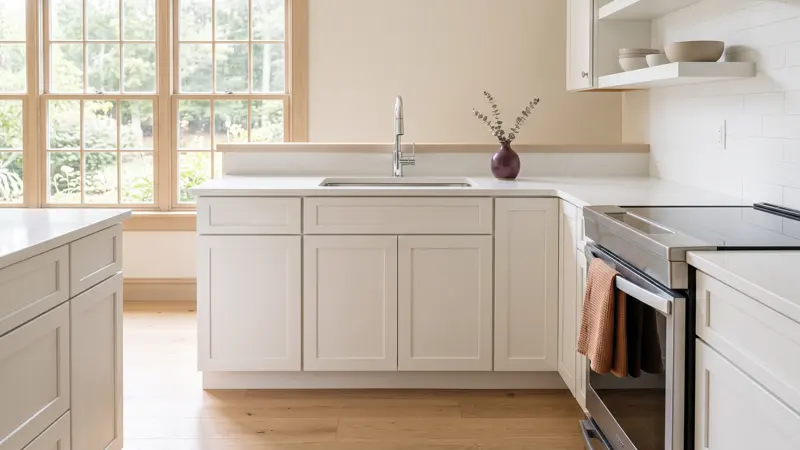
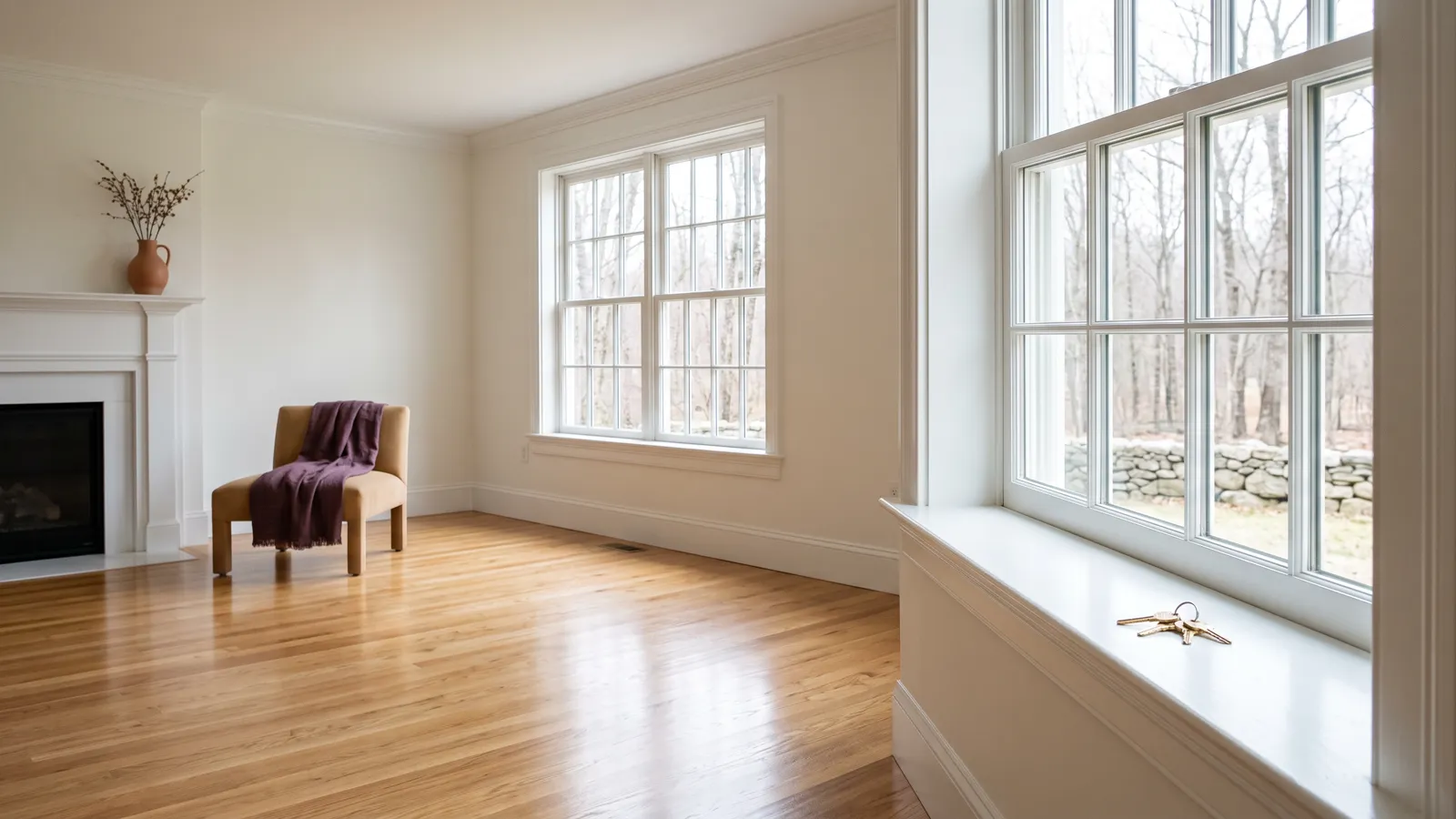
Move-in and move-out cleaning is a top-to-bottom clean of an empty home, done after one household leaves and before the next one settles in. It covers every room, surface and fixture you can reach, with extra attention to the baseboards, floors and corners that furniture used to hide. The goal is a home that is ready to live in.
What is move-in and move-out cleaning, exactly?
The two names describe the same work from different sides. A move-out clean hands the home over in good order, whether to a landlord, a buyer or the next tenant. A move-in clean resets the home to your own standard before your things arrive.
What does move-out cleaning include?
Move-out cleaning includes every room of the empty home, from ceiling corners and light fixtures down to baseboards and floors. Because nothing is left in the rooms, the clean can reach places a regular visit works around.
The work follows the same logic as any thorough clean: top to bottom, and from the back of the house toward the front door, so nothing clean gets walked on again. Floors come last in each room.
Room-by-room move-out cleaning checklist
| Area | What gets cleaned |
|---|---|
| Every room | Ceiling corners, light fixtures within reach, switches and outlet covers, door frames and doors, window sills and tracks, baseboards, closets and shelves, floors |
| Kitchen | Countertops, backsplash, cabinet fronts and handles, sink and faucet, stovetop, range hood exterior, microwave inside and out, appliance exteriors |
| Bathrooms | Tub and shower, tile and grout surface, toilet inside and out, vanity and sink, mirrors, faucets and metals, exhaust fan cover |
| Entry and stairs | Door and threshold, stair treads and corners, railings, closet |
| Laundry area | Washer and dryer exteriors, surrounding floor, shelving |
Two small details make an empty home read as clean. Mirrors and glass should be streak-free when you look at them from the side, not only straight on. Faucets and metal fixtures should be dried and polished, because water spots show quickly on an empty counter.
What does a move-in cleaning include?
A move-in cleaning includes the same room-by-room list, with the focus shifted to the surfaces you and your family will touch first. That means kitchen counters, drawer pulls, bathroom fixtures, light switches and doorknobs.
The CDC notes that cleaning with soap and water removes most germs, dirt and impurities from surfaces, and it names light switches, doorknobs and countertops as high-touch surfaces. Disinfecting is a separate step that the CDC recommends mainly when someone is sick or at higher risk of getting sick. For most move-ins, a careful clean is the right starting point.
A move-in clean is also your chance to check the house before it fills up. With the rooms empty, you can see the condition of floors, walls and sills clearly, and note anything that needs a repair rather than a cleaning.
What is usually not included?
The base clean usually covers what you can reach and see, and a few larger jobs are quoted separately. Knowing this upfront avoids surprises on moving day.
- Inside cabinets and the pantry. Wiping every shelf and drawer interior takes real time in a full kitchen, so it is often an extra.
- Inside the refrigerator and oven. These depend heavily on condition, so they are usually quoted as add-ons once someone has seen them.
- Exterior windows, garages and outdoor areas. These are outside the scope of most interior cleans.
- Repairs and painting. Nail holes, scuffed paint and worn carpet are maintenance items, not cleaning.
- Mold beyond a small patch. The EPA says that if a moldy area is larger than about 10 square feet, roughly a 3-foot by 3-foot patch, it calls for professional guidance rather than routine cleaning.
If you are moving out of a rental, compare the list with your lease and any move-out instructions from your landlord. Those documents decide what is expected of you.
How do you plan a move-in or move-out clean?
Schedule the clean for the gap between the last box leaving and the first box arriving. Cleaning around movers, boxes and furniture means the floors and baseboards get done twice, or not at all.
- Book a date after the movers. For a move-out, the last furniture should be gone. For a move-in, the clean should finish before the truck arrives.
- Confirm the scope. Decide on cabinets, the refrigerator and the oven before the day, so the time and quote match.
- Turn on the utilities. Water, power and lights are needed for the clean and for checking the result.
- Arrange access. Plan how keys or door codes will be handed over, and share them only with the people who need them.
- Empty the home fully. Remove the last bags, cleaning supplies and items left in closets or under sinks.
- Walk through afterward. Check each room in daylight and with the lights on. Side light shows streaks and dust that overhead light hides.
Safety notes for an empty home
Empty homes are often cleaned in a single push, which is when people reach for stronger products. The CDC advises reading the label, wearing gloves, keeping the area ventilated and never mixing chemical products. The EPA specifically warns never to mix chlorine bleach with cleaners that contain ammonia, because toxic fumes can form.
Surfaces matter too. The Natural Stone Institute warns that lemon, vinegar and other acids can dull or etch many stones, and that scouring powders can scratch them. It recommends a neutral cleaner, stone soap or a mild dish detergent with warm water. The same caution about harsh, abrasive products applies to wood floors and trim.
What is different about New England homes?
Many homes in Southern New Hampshire and the Merrimack Valley are older, and that changes how the dust should be handled. According to the EPA, about three-quarters of US homes built before 1978 still contain some lead-based paint, and worn paint on window sills and doors can produce chips and dust.
The EPA recommends wet methods for that dust: wiping sills, countertops and door jambs with a damp cloth, and wet-mopping floors instead of dry sweeping. In an older house, this is the safer default for the sills and floors, which are exactly the spots a move clean spends the most time on. If you plan any renovation before moving in, finish it first and clean last.
Humid summers are the other local factor. The EPA suggests keeping indoor humidity below 60 percent, ideally between 30 and 50 percent, and running exhaust fans while showering and cooking. A house that sat closed during a humid month is worth checking in bathrooms, closets and the basement before you unpack.
How Andemora handles a move
At Andemora, Move In / Move Out is its own service. Microwave interiors are part of the clean. Inside cabinets and the pantry are a separate extra, and refrigerator and oven interiors are add-ons quoted by condition, so the scope is clear before the day.
Every visit follows the same four steps of the Triple-A Standard. The team arrives on time with its own supplies, works top to bottom from the back of the house to the front door, and re-checks every room against the checklist under room light and natural light. At lock-up, the lights go off, the doors are locked, and you get a message that the home is ready. Keys and codes are never discussed with anyone.
If you are planning a move in Southern New Hampshire or the Merrimack Valley, you can request an estimate. For a lived-in home rather than an empty one, see what a deep clean of a house includes, or compare deep cleaning and regular cleaning.
Frequently asked questions
Is move-out cleaning the same as a deep clean?
They share most tasks, but a move-out clean happens in an empty home, so it reaches the floors, walls and baseboards that furniture usually hides. A deep clean works around your belongings in a lived-in home.
Should I be home during a move-in or move-out cleaning?
It is not necessary. Most people arrange access with a key or door code and do a walkthrough afterward, ideally in daylight.
Do I need to disinfect a house before moving in?
For most homes, thorough cleaning of surfaces with soap and water is enough. The CDC reserves disinfecting for when someone is sick or at higher risk of getting sick.
Does move-out cleaning include inside the cabinets?
Often it is an extra rather than part of the base clean. Ask when you book so the scope matches what your landlord or buyer expects.
Sources
- When and How to Clean and Disinfect Your Home · CDC
- Protect Your Family from Sources of Lead · EPA
- A Brief Guide to Mold, Moisture and Your Home · EPA
- Cleaning Products and Care for Natural Stone · Natural Stone Institute