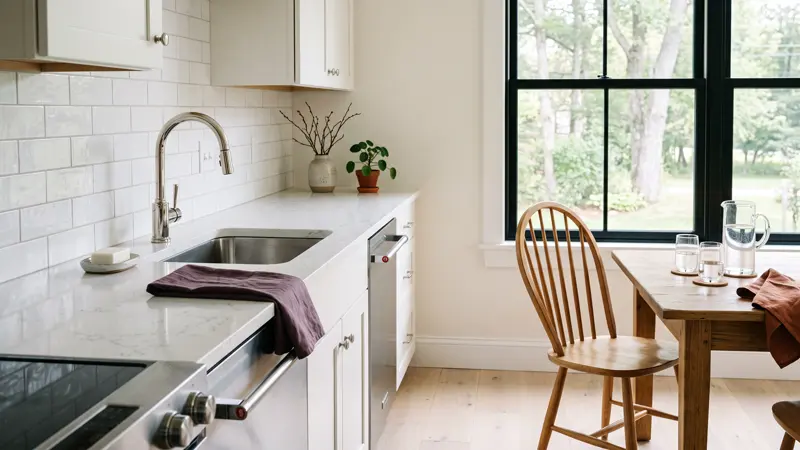
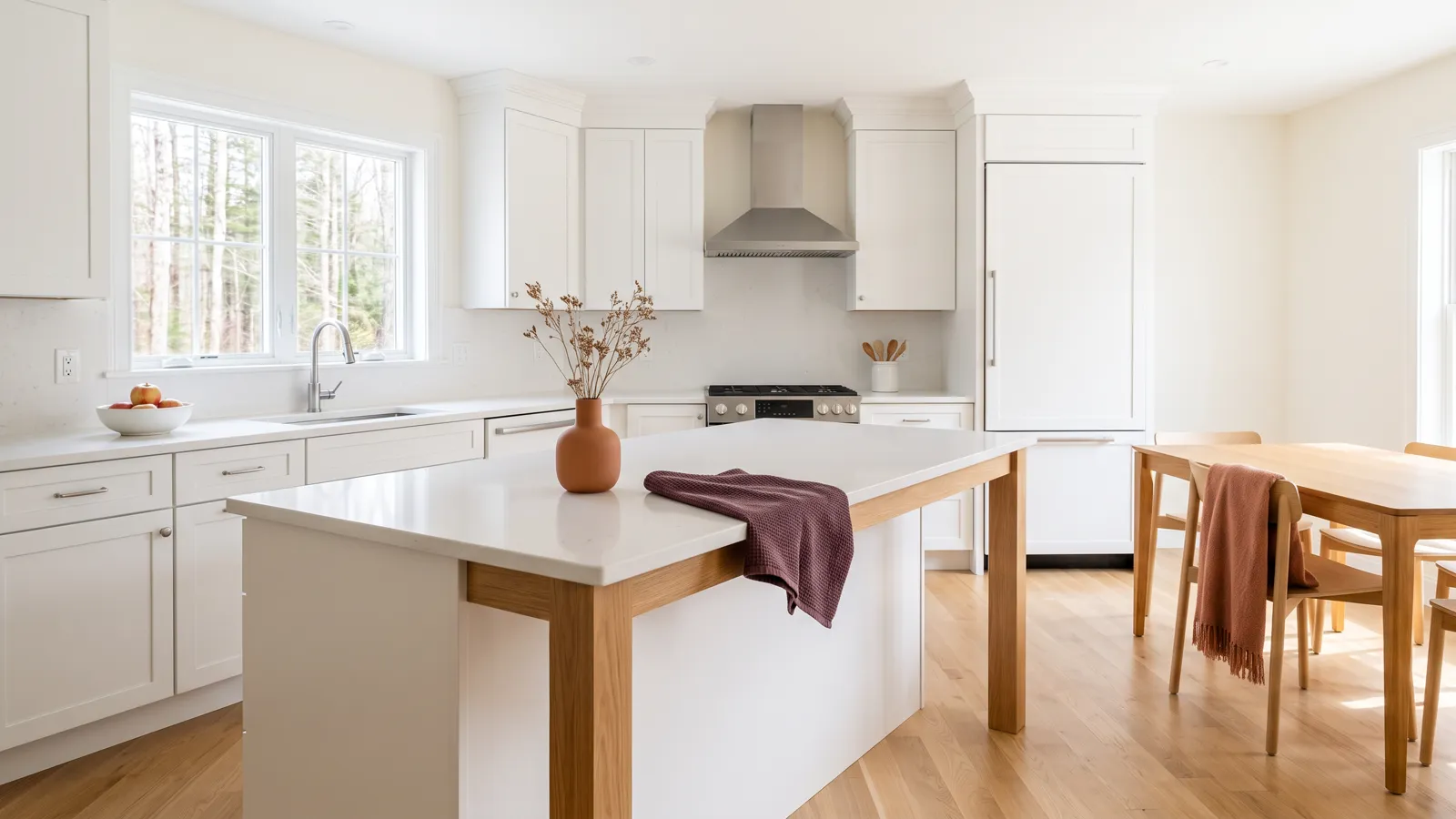
Post-construction cleaning includes removing the fine dust and residue a renovation leaves on every surface: light fixtures, vents, walls, window frames and tracks, cabinet fronts, counters, fixtures, baseboards and floors. It runs top to bottom, captures dust instead of pushing it into the air, and ends with the floors, so the space is ready to move back into.
What is post-construction cleaning?
Post-construction cleaning is the final clean after building or renovation work is done. It is also called post-renovation cleaning. The contractor usually removes the large debris, such as offcuts, packaging and leftover materials, and the cleaning deals with what remains.
What remains is mostly dust. It settles on tops of door frames, inside light fixtures, in window tracks and along every horizontal edge. It also clings to walls and new fixtures as a thin film that a quick wipe tends to smear rather than lift.
The job is different from a regular or deep clean in one way. A deep clean removes build-up from daily life. A post-construction clean removes a new, very fine layer that covers the whole work area at once, including places no one has touched yet.
What does post-construction cleaning include, room by room?
Post-construction cleaning includes every surface in and around the work area, from the ceiling down. The table below is a typical scope for a home renovation.
| Area | What is cleaned |
|---|---|
| Ceilings and walls | Dust removed from ceiling corners, walls and trim; light fixtures and fan blades wiped |
| Vents and registers | Covers vacuumed and wiped once the dusty work is over |
| Windows | Frames, sills and tracks cleaned; glass cleaned streak-free inside |
| Doors | Tops of frames, door faces, hinges and handles wiped |
| Kitchen | Cabinet fronts, tops and handles; counters and backsplash; sink and faucet; appliance exteriors; inside the microwave |
| Bathrooms | Tub, shower, glass, tile, toilet, vanity, mirrors and fixtures; paint and adhesive film removed where it is safe for the finish |
| Outlets and switches | Plates wiped with a barely damp cloth |
| Baseboards and stairs | Baseboards, stair edges and corners dust-free |
| Floors | Vacuumed first, then damp mopped; carpet vacuumed thoroughly |
Some items are usually named separately. The inside of new cabinets and drawers, the inside of the refrigerator and the inside of the oven often sit outside the basic scope. If you want them done, ask for them by name when you book.
For a room-by-room look at how this compares with a full reset of a lived-in home, see what a deep clean of a house includes.
What does post-construction cleaning look like, step by step?
Post-construction cleaning looks like a slow, top-to-bottom pass in which the dust is captured first and wiped second. Order matters, because anything cleaned early will catch dust falling from above.
- Confirm the work is finished. Sanding, cutting and drilling should be done, and the debris removed.
- Ventilate. Open windows when the weather allows, especially if paint, finish or adhesive smells remain.
- Start high. Ceiling corners, light fixtures, fan blades, tops of cabinets and door frames.
- Capture the dust. Vacuum surfaces with a HEPA-filtered vacuum where fine dust is heavy, rather than dry sweeping or brushing it into the air.
- Wipe everything. Walls, trim, window frames and tracks, cabinet fronts, counters and fixtures, with damp cloths changed often.
- Clean the fixtures and glass. Sinks, faucets, tile, mirrors and windows, dried and polished last so dust does not settle on a wet surface.
- Finish the floors. Vacuum, then damp mop, working from the back of the room to the door.
- Walk through in daylight. Side light shows the film and fingerprints that overhead light hides.
The step that makes the difference is step four. OSHA's construction standard for silica does not allow dry sweeping or dry brushing where it could expose workers to silica dust, unless wet sweeping, HEPA-filtered vacuuming or similar methods are not feasible. OSHA defines a HEPA filter as one that removes at least 99.97 percent of particles 0.3 micrometers in diameter.
Why is renovation dust different from regular dust?
Renovation dust can carry materials that ordinary household dust does not. Two are worth knowing about before anyone starts cleaning.
Silica. OSHA lists stone, concrete, brick, block, mortar, sand and ceramic products as containing crystalline silica. Cutting, sawing, grinding and drilling these materials creates fine dust that can be breathed in. OSHA links long-term exposure to silicosis, lung cancer, COPD and kidney disease. A kitchen with new stone counters or a bathroom with new tile is the usual source in a home.
Lead. The EPA says about three-quarters of US homes built before 1978 still contain some lead-based paint. Anyone paid to do work that disturbs painted surfaces in those homes must be certified in lead-safe practices. For cleanup, the EPA advises HEPA vacuuming all surfaces and objects, then wiping them with wet disposable cloths until the cloths come away clean, and mopping floors thoroughly.
The EPA also advises keeping children, pregnant women and pets out of the work area at all times while lead dust may be present.
When should post-construction cleaning happen?
Post-construction cleaning should happen after the last dusty task is done and before furniture, rugs and boxes go back in. Cleaning an empty room is faster and more complete, and it keeps new dust out of upholstery and closets.
Plan around the heating and cooling system as well. The EPA advises sealing supply and return registers during dusty renovation work and not running the system until after the dust is cleaned up. Change the filter once the work is over, and again sooner if it clogs. The EPA does not recommend routine duct cleaning, only cases such as ducts clogged with dust or debris that blows out of the registers.
Is it safe to use cleaning products right after a renovation?
It is, as long as you follow the label and keep the air moving. New paint, varnish and adhesives release volatile organic compounds, and the EPA advises increasing ventilation when these products are in use and following the manufacturer's directions.
New surfaces need gentle products too. Fresh grout, natural stone and new wood floors are easy to scratch or etch, so skip abrasive powders and scrub pads on them and check the maker's care instructions first.
What is specific to New England renovations?
Older homes are common across Southern New Hampshire and the Merrimack Valley, so the lead question comes up often. If your house was built before 1978, it is worth asking about before the work starts, not after.
Weather plays a part too. Winter renovations happen with windows shut and the heat running, which makes sealing the registers and ventilating when you can more important. In mud season, a runner at the entry keeps tracked-in grit off floors that were just cleaned.
How Andemora handles post-construction cleaning
Post-Construction Cleaning at Andemora follows the same Triple-A Standard as every visit. The team arrives on time, uniformed, with its own supplies, and works top to bottom, from the back of the house to the front door. Every room is then re-checked against the checklist under room light and natural light, which is where leftover film shows.
The details carry over: mirrors and glass streak-free under side light, faucets and metals dried and polished, baseboards and stair corners dust-free. Abrasive products never touch natural stone or wood. If the renovation also means a move, the move-in and move-out guide covers what changes. When the work is done, you can ask for an estimate.
Frequently asked questions
What is post-construction cleaning called?
You will also see it called post-renovation cleaning, construction cleanup or a final clean. The names describe the same job, which is taking a finished space from dusty to ready to live in.
Should I clean after the contractor or wait?
Wait until the dusty work is fully done and the debris is out. Cleaning between trades is possible, but any sanding or cutting afterward puts dust back on every surface.
Can I use my regular vacuum after a renovation?
For lead dust, the EPA says to use a HEPA vacuum, and OSHA discourages non-HEPA vacuums for silica dust because fine particles pass through the exhaust. A regular household vacuum can blow the finest dust back into the room.
Does post-construction cleaning include inside the cabinets?
Not always. Cabinet fronts, tops and handles are standard, while the inside of cabinets and drawers is often scoped separately, so ask for it by name before the visit.
Sources
- Lead-Safe Renovations for DIYers · EPA
- How can homeowners protect themselves and their families from exposure to lead dust if they plan on doing their own renovations? · EPA
- Lead Renovation, Repair and Painting Program · EPA
- Should You Have the Air Ducts in Your Home Cleaned? · EPA
- Volatile Organic Compounds' Impact on Indoor Air Quality · EPA
- Crystalline Silica · OSHA
- 1926.1153 - Respirable crystalline silica · OSHA
- When and How to Clean and Disinfect Your Home · CDC