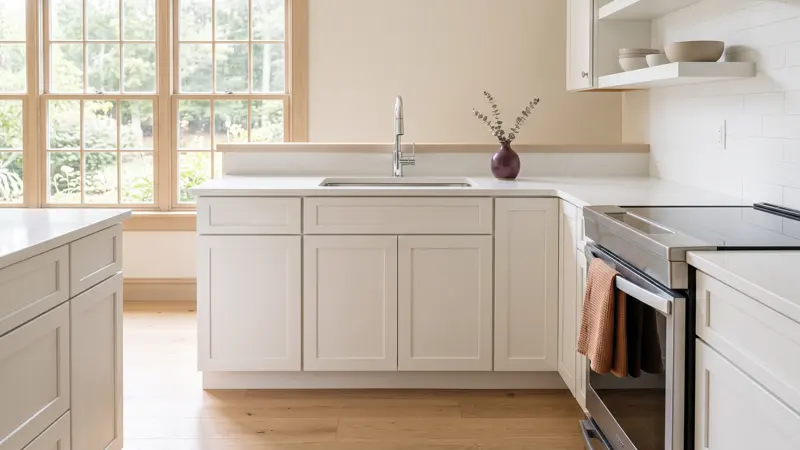
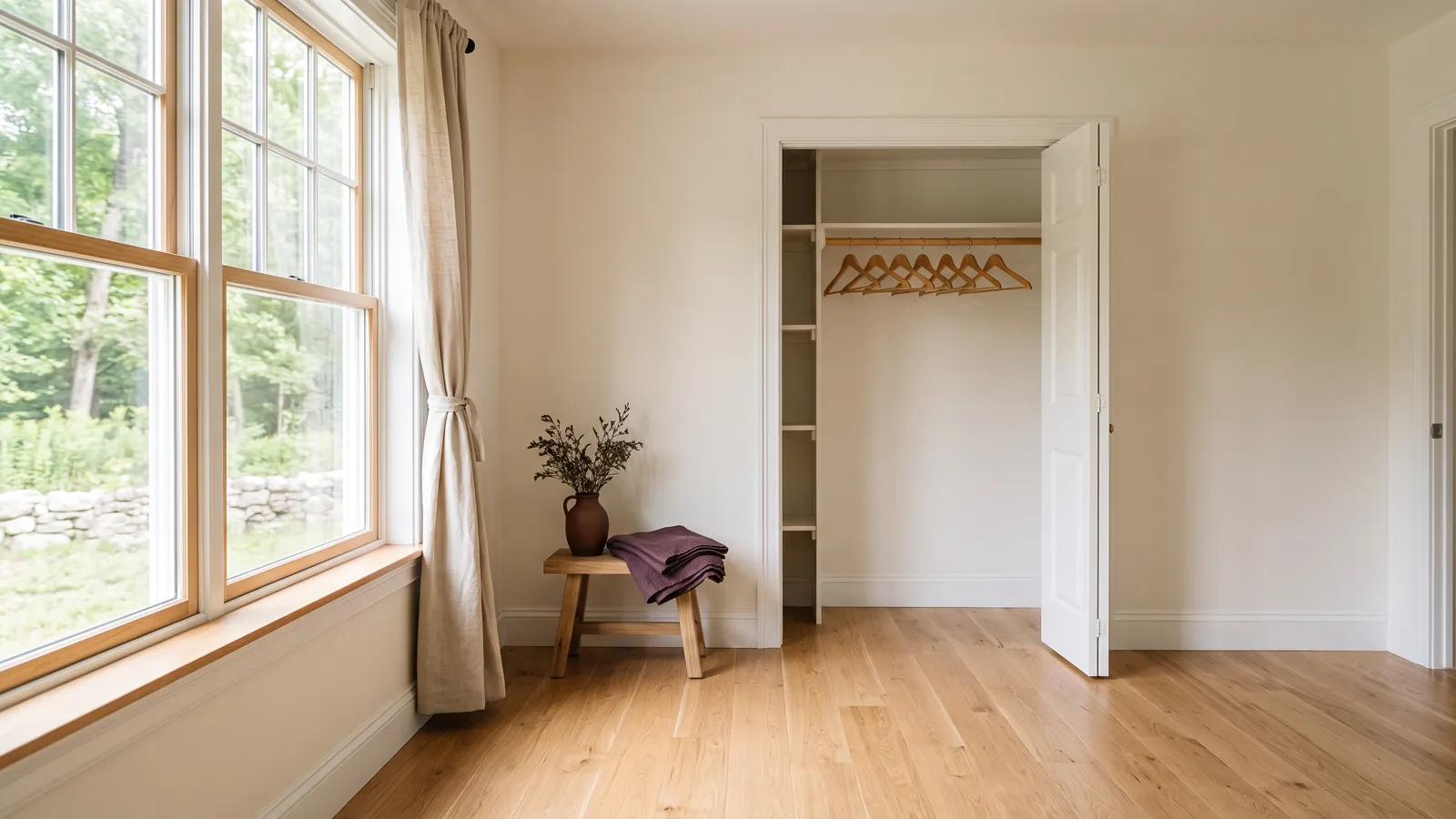
How clean should your house be when you move out? Clean enough that the next person can unpack without cleaning first: rooms emptied, surfaces wiped, appliances and fixtures done, floors washed last, and nothing left in closets or the garage. Your lease or purchase agreement sets the written minimum. The walkthrough sets the impression.
How clean should your house be when you move out, in practice?
The practical test is whether someone could carry a box into any room and set it down without hesitating. That means no dust on sills and baseboards, no grease in the kitchen, no rings in the bathrooms, and no crumbs or hangers left in the closets.
The written expectations come from two places. A lease usually describes the condition the home must be returned in, sometimes with a move-out checklist attached. A purchase agreement often asks for the property to be left broom clean, which means emptied and swept rather than spotless.
Read the wording you actually signed, and if it is vague, ask for the list in writing before your last week. Rules for deposits and deductions differ between New Hampshire and Massachusetts, so your lease and your state's official tenant guidance are the references, not what a neighbor remembers.
Do you have to clean before moving out?
In most cases, yes. Some level of cleaning is nearly always part of the agreement, and it is the part you still control on the last day.
For renters, the end-of-tenancy inspection compares the home to its condition when you arrived. If you filled out a condition report at move-in, keep it and use it as your own checklist on the way out.
For sellers, the buyer walks through shortly before closing. A clean, empty house keeps that visit short and uneventful, which is worth more than it sounds when everyone is tired.
How much do I have to clean when moving out?
Enough that every surface in the home has been touched once, with the kitchen and bathrooms getting the most time. Here is what clean enough usually means, area by area.
| Area | What clean enough usually means |
|---|---|
| Kitchen | Counters and backsplash wiped, sink and faucet cleaned and dried, cabinet fronts and handles wiped, stovetop free of grease, microwave clean inside, appliance exteriors wiped |
| Refrigerator and oven | Emptied, defrosted if needed, interiors cleaned; these depend so much on condition that they are often handled separately |
| Bathrooms | Tub, shower, tile and grout surface, toilet inside and out, vanity, mirror streak-free under side light, faucets dried and polished, exhaust fan cover dusted |
| Bedrooms and living areas | Closet shelves and rods, window sills and tracks, baseboards, door frames, switch plates, floors |
| Entry, stairs and hallways | Door and threshold, stair treads and corners, railings, coat closet |
| Laundry and utility | Washer and dryer exteriors, the floor around them, shelving, utility sink |
| Whole house | Ceiling corners, light fixtures within reach, vent covers, all trash removed, fresh liners in any bin that stays |
Pay attention to what hands touch. The CDC names light switches, doorknobs and countertops as high-touch surfaces and notes that cleaning with soap and water removes most harmful viruses and bacteria. Disinfecting is a separate step the CDC reserves mainly for when someone has been sick or is at higher risk.
Where does cleaning end and repairs begin?
Cleaning removes dirt. Nail holes, scuffed paint, a cracked tile, a worn carpet and a scratched floor are repairs, and no amount of scrubbing will hide them.
Sorting the two before the last week helps. Patch and touch up what you are responsible for, decide what you will simply disclose, and let the cleaning be cleaning.
Damp spots deserve a look of their own. The EPA says that if a moldy area is smaller than about 10 square feet, roughly a 3-foot by 3-foot patch, most people can handle it themselves, and that cleaning without fixing the water problem means the mold most likely comes back. Larger areas call for professional guidance rather than a wipe-down on moving day.
What order should you clean in on moving day?
Clean after the home is empty, not around the last pile of boxes. Anything else means doing the floors twice.
- Empty the home completely. Closets, the attic, the basement, the garage, the shed and the space under the sinks.
- Take the trash out first. Bags on the floor get in the way of everything else.
- Work top to bottom. Light fixtures and ceiling corners, then shelves and sills, then baseboards.
- Move from the back of the house toward the front door. Nothing clean gets walked on twice.
- Give the kitchen and bathrooms the most time. They are where a walkthrough slows down.
- Do the floors last, room by room, finishing at the entry.
- Check each room twice, once under the room light and once in daylight. Side light shows streaks on mirrors and glass that overhead light hides.
Cleaning safely in an empty house
An empty home tempts people to use stronger products than they normally would. The CDC advises reading and following the label, wearing gloves, letting fresh air in with a fan or open windows, and never mixing products or chemicals with each other.
Surfaces are part of the handover too. The Natural Stone Institute warns that products containing lemon, vinegar or other acids can dull or etch calcareous stone, and that scouring powders often contain abrasives that scratch. It recommends a neutral cleaner, stone soap or a mild dish detergent with warm water. Etching a counter on your last day is a poor trade.
What is different about a move-out in New England?
Age of the housing stock, mostly. The EPA reports that about three-quarters of US homes built before 1978 still contain some lead-based paint, which is a common description of neighborhoods across Southern New Hampshire and the Merrimack Valley.
For those homes, the EPA recommends wet methods: wipe hard surfaces such as window sills and door frames with a damp sponge, cloth or paper towel, and wet-mop floors rather than dry sweeping. If there is visible dust or paint debris, it advises using only a vacuum with a HEPA filter.
Season matters as well. A winter move fills the entry and stairs with salt and slush from the movers' boots, so plan the entry, the treads and the floors for the very end. A summer handover in a closed-up house is worth checking for damp corners first; the EPA suggests keeping indoor humidity below 60 percent, ideally between 30 and 50 percent.
Is move-out cleaning worth it?
It depends on how much time you have left and what is riding on the result. If you are handing back a deposit-bearing rental, or a buyer is walking through the next morning, the clean has a job to do and doing it while exhausted is how details get missed.
Booking it out also separates the two days: movers finish, cleaners work in an empty house, and you show up to a walkthrough rather than a task list. If you have the time and the house is in good shape, the checklist above is entirely doable on your own.
How Andemora handles a move-out
Move In / Move Out is its own service at Andemora, planned for the window after the last box leaves. Inside the microwave is part of the clean. Inside cabinets and pantry organization are arranged separately, and refrigerator and oven interiors are add-ons quoted by condition, so the scope is agreed before the day.
Every visit follows the Triple-A Standard. The team arrives on time with its own supplies, works top to bottom from the back of the house to the front door, then re-checks every room against the checklist under room light and natural light. At lock-up the lights go off, the doors are locked, and you get a message that the home is ready. Keys and codes stay between you and the team.
If you are moving in Southern New Hampshire or the Merrimack Valley, you can request an estimate. For the full scope of an empty-home clean, see what move-in and move-out cleaning includes, and if you are the one arriving, should you deep clean a house before moving in covers the other side of the same day.
Frequently asked questions
Do you have to clean the carpets when you move out?
Check the lease. Some leases ask for carpets to be professionally cleaned at the end of the tenancy, and that is specialist work usually booked on its own, separate from a move-out clean.
Should you clean before or after the final walkthrough?
Before. The walkthrough is when the landlord, buyer or agent forms an opinion, so the clean should be finished and the home empty by then.
What should you never leave behind when you move out?
Trash, cleaning supplies, paint cans, batteries and anything stored in the attic, basement or garage. Paint and chemicals have local disposal rules, so check with your town before moving week.
Is a move-out clean the same as a deep clean?
The tasks overlap, but a move-out clean happens in an empty home, so it reaches floors, closets and baseboards that furniture normally hides.
Who cleans a house after closing, the seller or the buyer?
Most purchase agreements ask the seller to leave the home emptied and swept. Buyers who want it cleaner than that usually book their own clean before the furniture arrives.
Sources
- When and How to Clean and Disinfect Your Home · CDC
- Protect Your Family from Sources of Lead · EPA
- A Brief Guide to Mold, Moisture and Your Home · EPA
- Care and Cleaning of Natural Stone · Natural Stone Institute